 Preskoči na vsebino
Zemljevid strani
Preskoči na vsebino
Zemljevid strani
History of research
FIRST ROMAN SARCOPHAGUS
Andreas Schmutz (parish priest in Rogatec 1723-1749)
The first sarcophagus, with relief decoration and an inscription, was found on 3 May 1743. Andreas Schmutz, parish priest from Rogatec, wrote of this find to his 24-year nephew Paul Hieronim Schmutz, who then studied theology in Graz. Quarter of a century later, Julius Caesar Aquilinius published part of this letter in the first volume of Annales Ducatus Styriae. The letter reveals that a stonemason from the borough of Rogatec went to Rogáč that day to look for a suitable stone to use for his work. Midway up, he began pulling stones from the ground. These included a skilfully made sarcophagus with figural decoration. The sarcophagus contained disintegrating bones that included one skull. Carved near the head of the deceased was an inscription with the names of two individuals: AI·MASCULUS·AI·AVITA·C·PIA. The exact findspot of the sarcophagus is unknown, as is its size and fate after discovery.
The discovery of this sarcophagus may be connected with the renovation of the church of St Donatus on Rogáč. On 6 August 1741, there was a heavy storm with lightning bolts that heavily damaged the church and killed 59 people. Renovation work began in 1743, immediately after the construction of two churches in the borough of Rogatec. The first of these churches was that of St Hyacinth built between 1730 and 1738. Then in 1738, the dilapidated parish church of St Bartholomew was torn down and a new one erected by 1743. It is possible the stonemason that Schmutz mentioned was involved in the construction of both churches and the renovation of the church of St Donatus; the latter was consecrated on 10 November 1743.
SECOND ROMAN SARCOPHAGUS
Anton Centrih (parish priest in Rogatec 1862- 1886)
Anton Centrih became parish priest of Rogatec in 1862. At this time, a second sarcophagus came to light on Rogáč, presumably near the first one. Centrih described the circumstances of this discovery in detail. The sarcophagus of coarse- grained sandstone had a stone lid. Its interior measured 5 x 2 feet (roughly 150 cm x 60 cm). The bones largely disintegrated soon after the sarcophagus was opened. In addition to the bones, the sarcophagus held a coin of the Emperor Constans (CE 337-350). Found under the sarcophagus was a small and coarsely carved statue of/relief showing a genius, also of sandstone. The sarcophagus was transported to the valley and placed in front of the church of St Bartholomew. Later, it was buried at the south side of the church.
The discovery of the sarcophagus inspired Centrih to further investigate on Rogáč. After his death in 1886, priest Johann Vraz sent Centrih’s notes on his investigations and the recovered Roman coins to Ignacij Orožen, historian in Maribor. These records and finds were lost after Orožen’s death in 1900.
SETTLEMENT IN DVOR
Anton Kores (local from Rogáč, second half of the 19th century)
Ignacij Orožen (parish priest in Rogaška Slatina in 1865-1867, historian)
In the time when the second sarcophagus was unearthed, the memory of the first one must still have been alive among the people living below Rogáč. A knowledgeable farmer from Rogáč, Anton Kores, reported the following:
Rising from the ground on the southern slope of Donáčka gora, between its summit and the church of St Donatus, are mighty, tower-like masses of stone. They surround an area, 12 to 16 yokes large, called Dvor. One enters Dvor through three up to 2 fathoms wide gates hewn into the bedrock. Its interior holds traces of numerous houses aligned as if along streets. This was a city or fort on Rogáč or Donáčka gora. Also found here were coins, arrows and slag.
Ignacij Orožen added the following to the report of Anton Kores:
This rocky nest may have held a hiding place or a fort and the afore-mentioned Roman road may have led to this hiding place or its vicinity. The settlement on Donáčka gora points to the Migration period, which began under the reign of the Roman Emperor Gratianus (376 – 383 CE).
The main source of archaeological, historical and topographic data on Rogáč and its surroundings in this period is the seventh volume of Das Bisthum und die Diözese Lavant, an extensive work that Ignacij Orožen, Catholic priest and historian from Štajerska published in 1889. The book brings the history of the Rogatec parish. Orožen knew Rogáč well, having undoubtedly befriended Ernest Frölich, the renowned medical doctor from Vienna who organised excursions to Rogáč for his distinguished guests who came to the Rogaška Slatina spa resort from all over Europe.
RENEWED INTEREST
Stanko Pahič (Maribor Regional Museum, 1950-1970)
Slavko Ciglenečki (Institute of Archaeology, since 1970)
After a long absence of investigations, caused in the first half of the 20th century by two world wars, Rogáč again raised professional curiosity after the wars. The first to show an interest albeit passing, was Stanko Pahič, member of the first post-war generation of archaeologists.
From the 1970s onwards, Slavko Ciglenečki showed a more active interest in the site. In the early 1970s, he found several shards of prehistoric and Late Antique pottery, as well as charcoal traces east of the church of St Donatus. This led him to posit an unfortified hilltop settlement that stood here in prehistory and in Late Antiquity; this hypothesis has as yet not been verified through archaeological investigations.
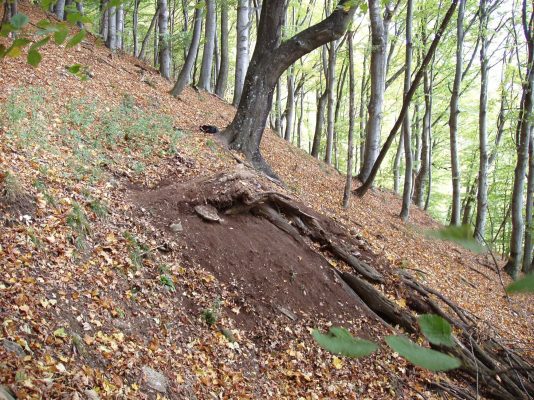
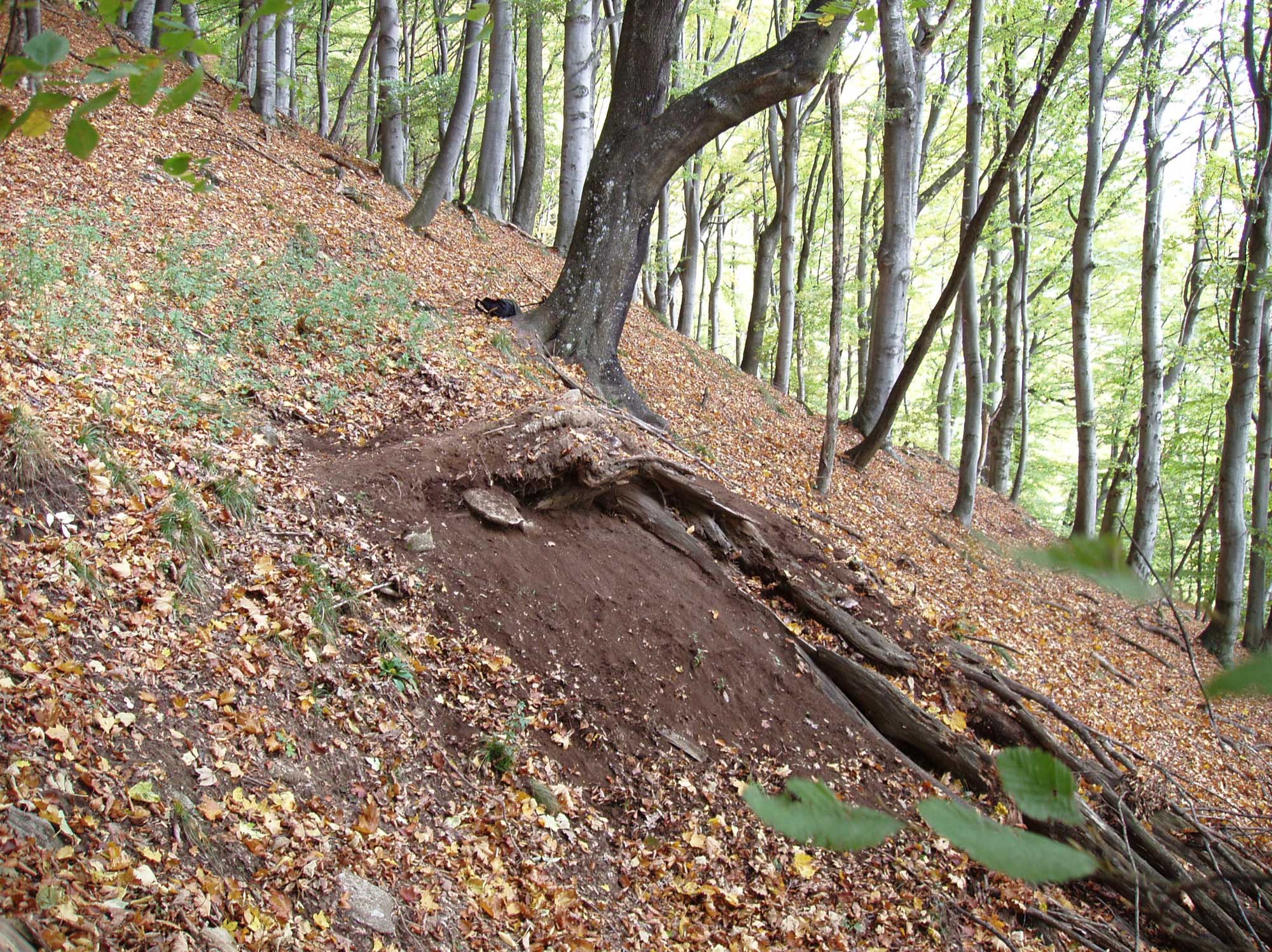
While surveying the very steep, terraced slope in Dvor in 1996, Ciglenečki again came across prehistoric and Late Antique pottery beside a fallen tree. Further surveys mainly yielded shards of Late Antique coarse cooking ware, which led him to presume that people living in the presumed settlement took refuge in Dvor in times of danger.
NEW APPROACH
(2006-2016)
The Rogatec Municipality – Institute of Tourism
Celje Regional Museum
National Museum of Slovenia Slovenian
Environment Agency (ARSO)
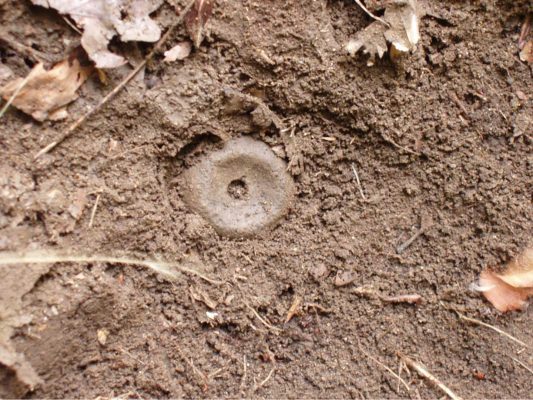
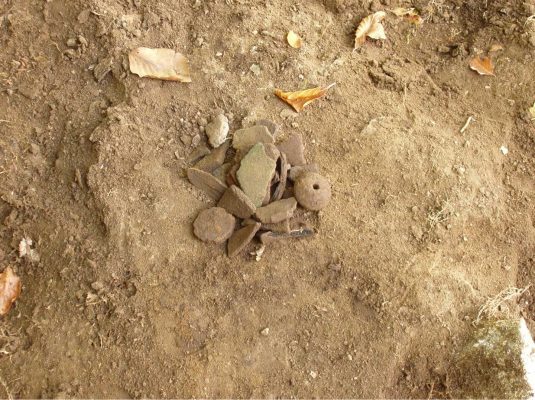
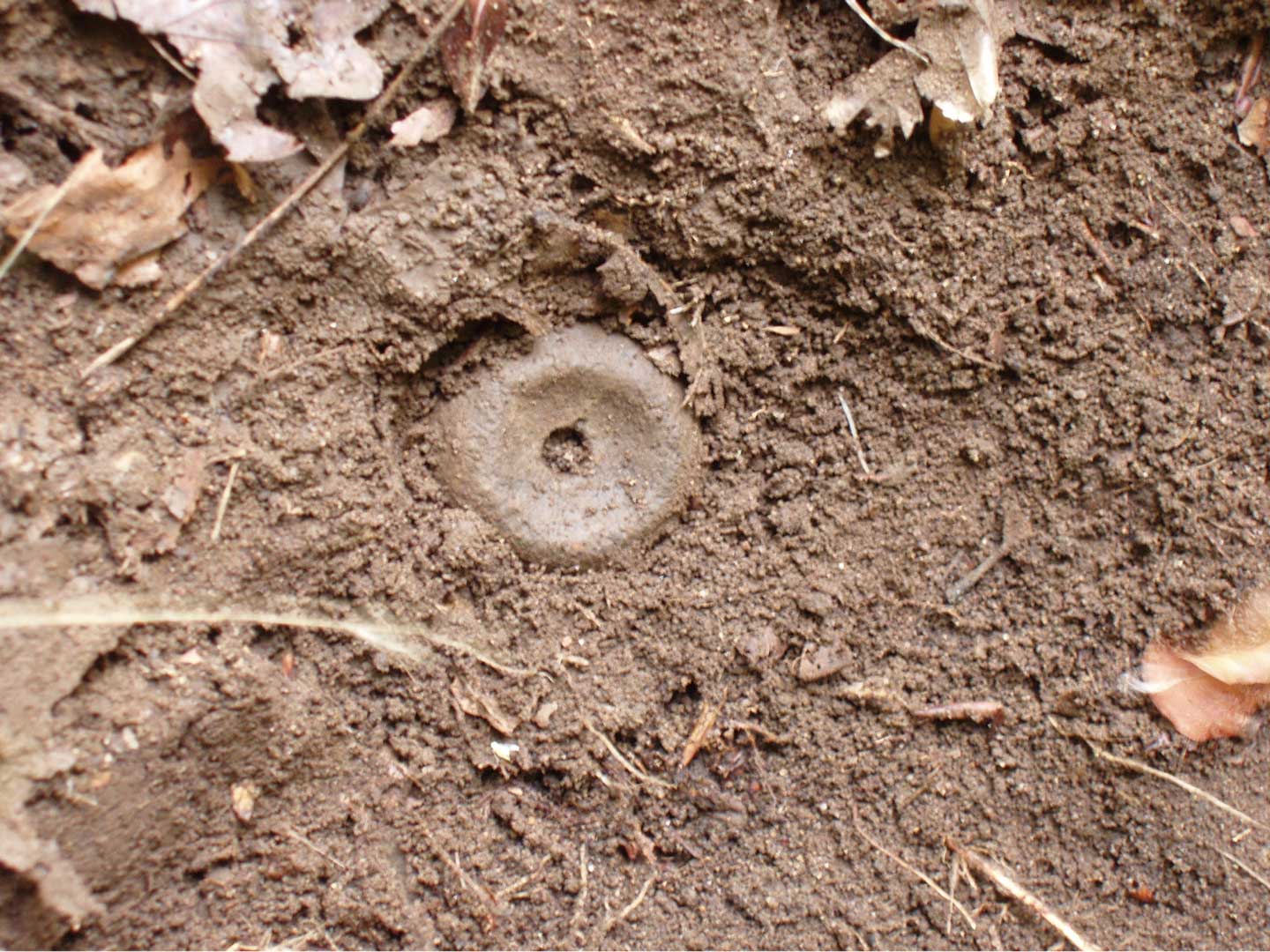
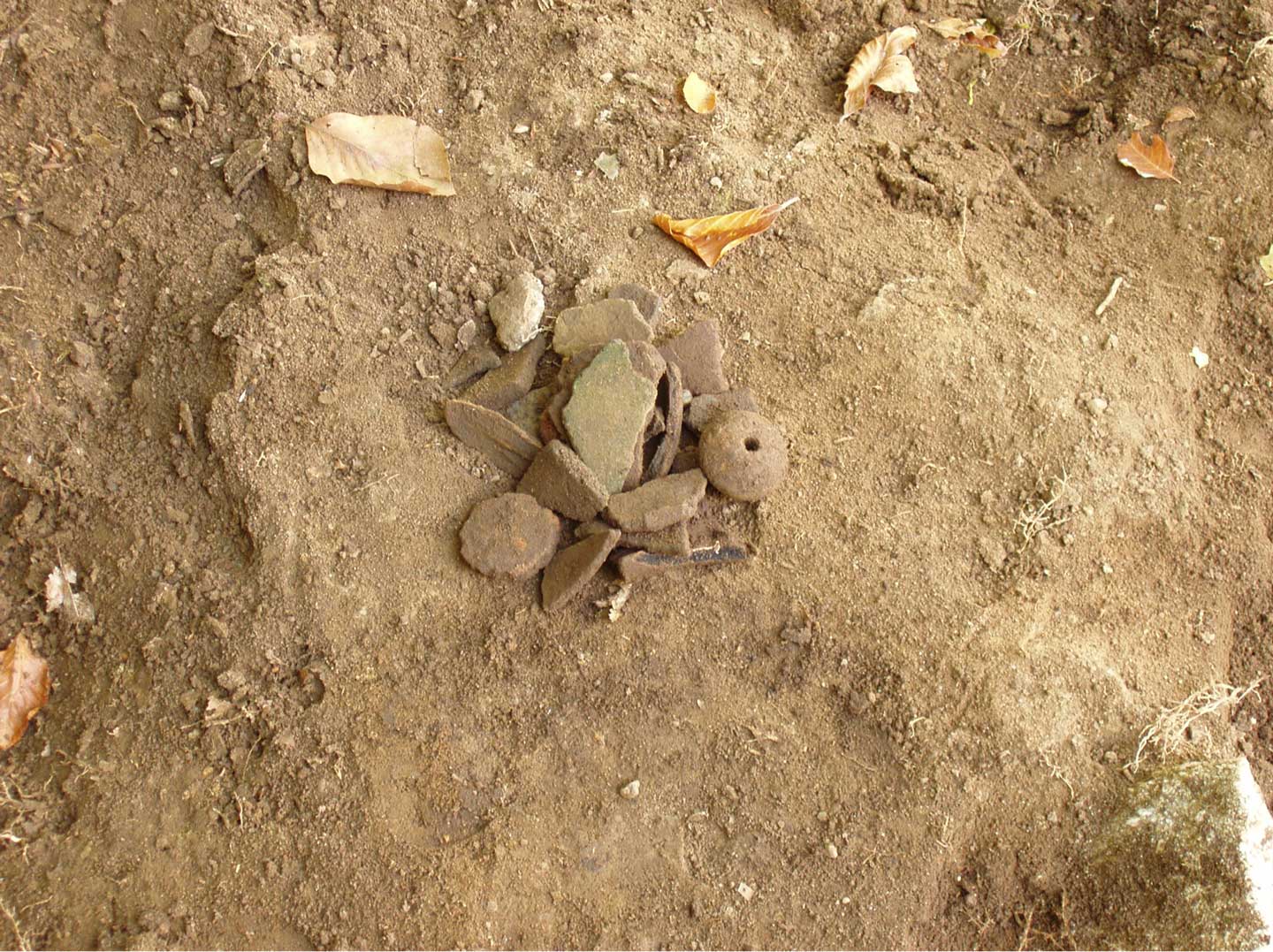
In 2006, independent researcher Matej Dasko on unearthed over 150 pottery shards one of the terraces in Dvor that Anton Kores first mentioned over a century prior. Archaeologist Boštjan Odar dated most of the pottery to the Late Bronze and Early Iron Ages. Using the airborne laser scanning or LiDAR data for the area of Rogáč made publicly available in 2016, a team of archaeologists conducted test-pitting on this terrace in the same year.
The fieldwork was followed by desk-top research of the recovered archaeological finds. The preliminary analysis revealed occasional human presence in Dvor in the Late Bronze Age, Early Iron Age, Late Antiquity, as well as Early and High Middle Ages. Even after that, the site remained in use to this day.
In the 16th century, a fire beacon was built on top of the mountain as part of the defence against the Turks. The fire beacon still stood there at the end of the 18th century and is also marked on the first Josephinian military map. Between 1716 and 1719, the church of St Donatus was constructed on the mountain. A lightning bolt heavily damaged the church in 1741 and also killed 59 pilgrims. Renovation began in 1743 and the church was consecrated on 10 November 1743. The last substantial intervention towards the end of the 19th or beginning of the 20th century on the mountain came with quarrying that local stone workers conducted to obtain the material for hand-mills; they supplied these to nearly all households in the area and beyond.